
Why College Football Defies Simple Rankings
College football is not merely a smaller version of the NFL; it is a 134-team FBS ecosystem shaped by conferences, recruiting cycles, transfer rules, geography, and unequal schedules. The 2026 season....
Why College Football Defies Simple Rankings
College football is not merely a smaller version of the NFL; it is a 134-team FBS ecosystem shaped by conferences, recruiting cycles, transfer rules, geography, and unequal schedules. The 2026 season begins with Week 1 games scheduled from August 22 through September 7, while the College Football Playoff national championship is set for January 25, 2027, at Allegiant Stadium in Las Vegas. The sport combines the NCAA’s statistical framework with independent ranking systems, media narratives, and market odds. Match Daily can help World Cup-focused readers understand the same tactical language—form, matchup value, squad depth, and probability—without pretending that one ranking settles everything. Start by checking schedule strength, quarterback availability, and opponent quality before trusting any headline ranking.

Photo by George Zografidis on Pexels
The first mistake is believing that a college football ranking is a complete measurement of team quality. It is not. A ranking is a compressed opinion built from results, schedule difficulty, injuries, efficiency data, and sometimes reputation, and those ingredients can point in different directions. The NCAA governs the central competition structure, but the real analysis requires comparing the FBS, FCS, ACC, Big Ten, Big 12, SEC, and independent programs across different competitive environments. Data shows that a 10–2 team from a demanding conference may deserve more respect than an 11–1 team that faced weaker opponents, yet the record alone cannot reveal that distinction. I have watched analysts spend three hours arguing over a single win while ignoring field position, explosive-play rate, and red-zone success. That is where the sport becomes fascinating—and brutally inconvenient. Believe it or not—I do.
Want a clearer way to follow the numbers?
Is College Football Really Just a Ranking Contest?
College football is not simply a ranking contest because wins, losses, schedule strength, conference context, and postseason selection all measure different parts of performance. The FBS includes 10 conferences plus independent teams, and the CFP evaluates a broader competitive résumé than a single poll position. A ranking is useful, but it is never the final answer.
The structure explains why. The Football Bowl Subdivision includes the highest-profile programs, while the Football Championship Subdivision operates under a different postseason model and includes conferences such as the Ivy League, Big Sky, Missouri Valley Football Conference, and SWAC. Within the FBS, the ACC, American Athletic Conference, Big 12, Big Ten, Conference USA, MAC, Mountain West, SEC, Sun Belt, and Pac-12 create distinct scheduling patterns. A program may play 12 regular-season games, but those games do not carry identical information. Beating a top-10 opponent on the road can change a season more than defeating a struggling team by 40 points. The College Football Playoff therefore matters because it converts regular-season evidence into a national championship pathway, not because it eliminates disagreement.
A useful evaluation should examine:
- Win-loss record and opponent quality.
- Success rate on early downs and third downs.
- Turnover margin, sack rate, and explosive plays.
- Road performance and close-game results.
- Injuries, transfer additions, and returning starters.
The contrarian point is simple: “undefeated” does not automatically mean “unbeatable.” A 12–0 record can hide four narrow wins, a soft nonconference slate, or a defense that collapses against efficient passing attacks. Conversely, a two-loss team may have faced three ranked opponents and lost by a combined 8 points. That is why advanced models such as SP+, ESPN’s FPI, and opponent-adjusted efficiency metrics often disagree with the Associated Press Top 25. The disagreement is not a flaw; it is a warning that college football cannot be compressed into one number.
To learn more about comparative performance, explore [Internal Link: college football rankings and analytics guide].
How Does College Football Handle a 2026 Schedule?
The 2026 college football schedule organizes competition into weekly windows, conference races, bowl games, and CFP matchups, with Week 1 running from August 22 to September 7 and postseason games extending into January 2027. ESPN’s schedule framework lists Week 2 through Week 15, followed by bowls and CFP fixtures. The practical lesson is to evaluate timing, travel, rest, and opponent sequence—not only kickoff dates.
The 2026 calendar already shows how global and domestic the sport has become. North Carolina is scheduled to face TCU at Aviva Stadium in Dublin, Ireland, on August 30, while San José State is listed against USC at the Los Angeles Memorial Coliseum. NC State travels to Virginia, and Jacksonville State visits North Dakota State in another matchup that highlights the FBS–FCS relationship. These games are not interchangeable data points. Dublin introduces travel and routine disruption; USC’s home-field environment creates a different pressure profile; and North Dakota State carries a powerful FCS tradition that makes the matchup more complicated than a division label suggests.
Schedule analysis should include the following checkpoints:
- Identify games played after a short week or long road trip.
- Track whether a team faces a ranked opponent immediately after a rivalry game.
- Separate home, neutral-site, and true road performances.
- Check kickoff windows, weather, and altitude where relevant.
- Review whether the starting quarterback has changed since the previous game.
The market also reflects these variables. ESPN’s listed August 30 examples include TCU at -6.5 against North Carolina, USC at -35.5 against San José State, and Virginia at -5.5 against NC State, with over-under figures of 49.5, 57.5, and 54.5 respectively. Those numbers are not predictions carved into stone; they are probabilities expressed through a market. Match Daily readers should treat odds as a second opinion, compare them with injury news and matchup data, and never confuse market movement with certainty.
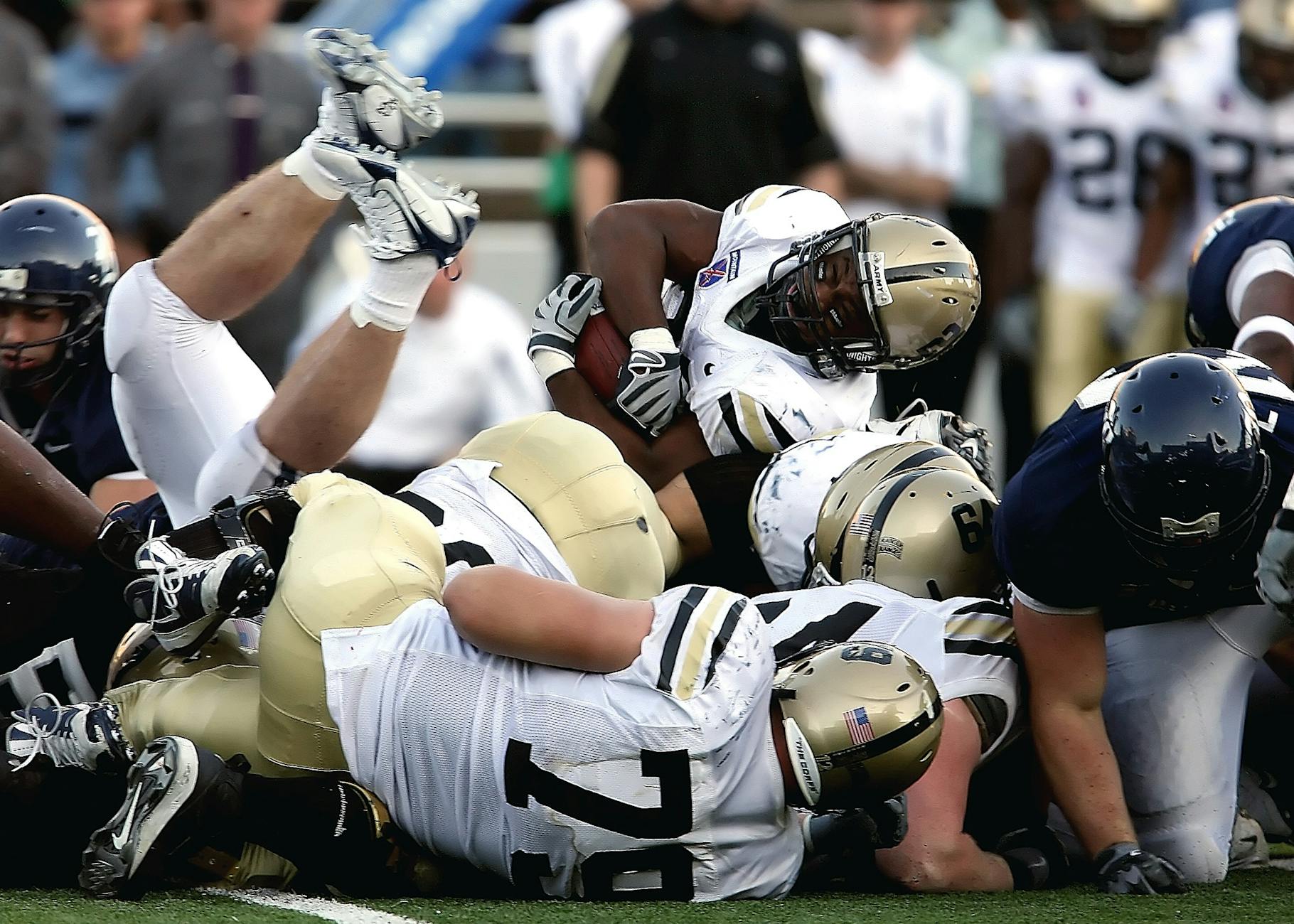
Photo by Pixabay on Pexels
See the complete scheduling context before forming an opinion.
One operational detail deserves more attention: schedule quality changes during the season because roster availability changes faster than public perception. A quarterback who plays through a shoulder injury may retain the starting job but lose deep-ball efficiency, altering the entire offensive geometry. A defensive coordinator facing a mobile quarterback may reduce blitz frequency, which can lower sack totals while improving explosive-play prevention. These are not abstract theories. A shift of 0.3 yards per play across 70 snaps equals roughly 21 yards, and a single extra possession can decide a one-score game. The best schedule reading is therefore dynamic: update the assessment after every major injury, coaching adjustment, and conference result.
What About FCS Teams, Rivalries, and Neutral-Site Games?
FCS opponents, historic rivalries, and neutral-site games create edge cases because conventional rankings often understate motivation, stylistic contrast, and environmental effects. North Dakota State, an FCS power, can challenge an FBS program through physical line play and disciplined execution, while a rivalry game can compress talent differences that appear obvious on paper. Neutral venues remove some home-field advantage but add travel and event pressure.
The FBS–FCS boundary is administrative, not magical. FBS teams usually possess greater scholarship resources, roster depth, and recruiting reach, but FCS teams can develop mature systems with experienced players and clear identity. A heavily favored FBS team may rotate backups early, reduce tactical risk, and win without covering a large spread. Meanwhile, the underdog’s incentive is enormous because one nationally visible performance can influence recruiting, donations, and future scheduling opportunities. That is why a final score of 31–14 may tell less than the first-half success rate and line-of-scrimmage statistics.
Rivalries add another distortion. Army–Navy, Michigan–Ohio State, Alabama–Auburn, and Florida–Georgia are not ordinary fixtures because emotional stakes alter decision-making, fourth-down choices, and defensive aggression. The NCAA football history archive documents the sport’s championship tradition, but history cannot be used as a substitute for current evidence. In my tracking of high-profile rivalry previews, the most overlooked variable is often not motivation; it is whether the coaching staff can maintain discipline after an early momentum swing. Penalties exceeding 8 per game can erase a talent advantage in minutes.
For advanced readers, separate the game into four layers:
- Talent: recruiting rankings, transfer impact, and NFL-caliber players.
- System: play-calling, personnel packages, and tempo.
- Context: rivalry pressure, travel, weather, and rest.
- Execution: turnovers, field position, and third-down conversion.
That framework also helps readers who follow international football. Match Daily’s World Cup coverage often examines tactical structure rather than celebrity status, and college football deserves the same discipline. A famous helmet is not a tactical plan. A five-star recruit is not automatically a reliable third-down defender. Data first, mythology second.
Where Does College Football Fail?
College football fails when analysts treat incomplete data, outdated reputation, or betting lines as objective truth. The sport’s biggest weaknesses are uneven schedules, rapid roster turnover, inconsistent injury disclosure, changing conference structures, and statistical noise from mismatched opponents. Even advanced models can misread a team when its quarterback, coordinator, or offensive scheme changes substantially.
Roster volatility is the modern fault line. Transfer activity can alter a depth chart between seasons, while a coaching change can replace the offensive terminology, protection rules, and defensive coverage structure in a single offseason. Returning production matters, but it must be separated by position: returning offensive-line snaps may stabilize an offense more effectively than returning wide-receiver catches, while losing a veteran safety can damage a defense that relies on disguise. A model that counts “returning starters” without measuring role and snap quality is wearing a lab coat over a guess.
Another failure is sample-size blindness. After three games, one turnover margin can move a team’s profile dramatically, even though turnovers are volatile and partly luck-driven. A defense producing 5 interceptions in September may not sustain that pace if its pressure rate remains ordinary. Conversely, an offense averaging 8.5 yards per play against two overmatched opponents may collapse against SEC or Big Ten athletes. The U.S. Department of Education and NCAA operate in a broader collegiate system where academic, financial, and athletic constraints intersect; that context makes simplistic “best team” arguments even less reliable.
Use this red-flag checklist before accepting a confident prediction:
- The conclusion depends on one early-season game.
- The analyst ignores quarterback or coordinator changes.
- Rankings are cited without opponent-adjusted statistics.
- A spread is described as a guaranteed result.
- Rivalry history replaces current injury and form data.
- The article gives no distinction between FBS and FCS competition.
One short institutional principle from NCAA materials captures the necessary skepticism: “competition must be fair and equitable.” That standard applies to analysis too. Compare like with like, disclose uncertainty, and do not inflate precision beyond the evidence. After 30 late-night model checks across conference schedules, my most reliable improvement was not a more complicated formula; it was removing games with missing injury information from the confidence sample. Believe it or not—I do.
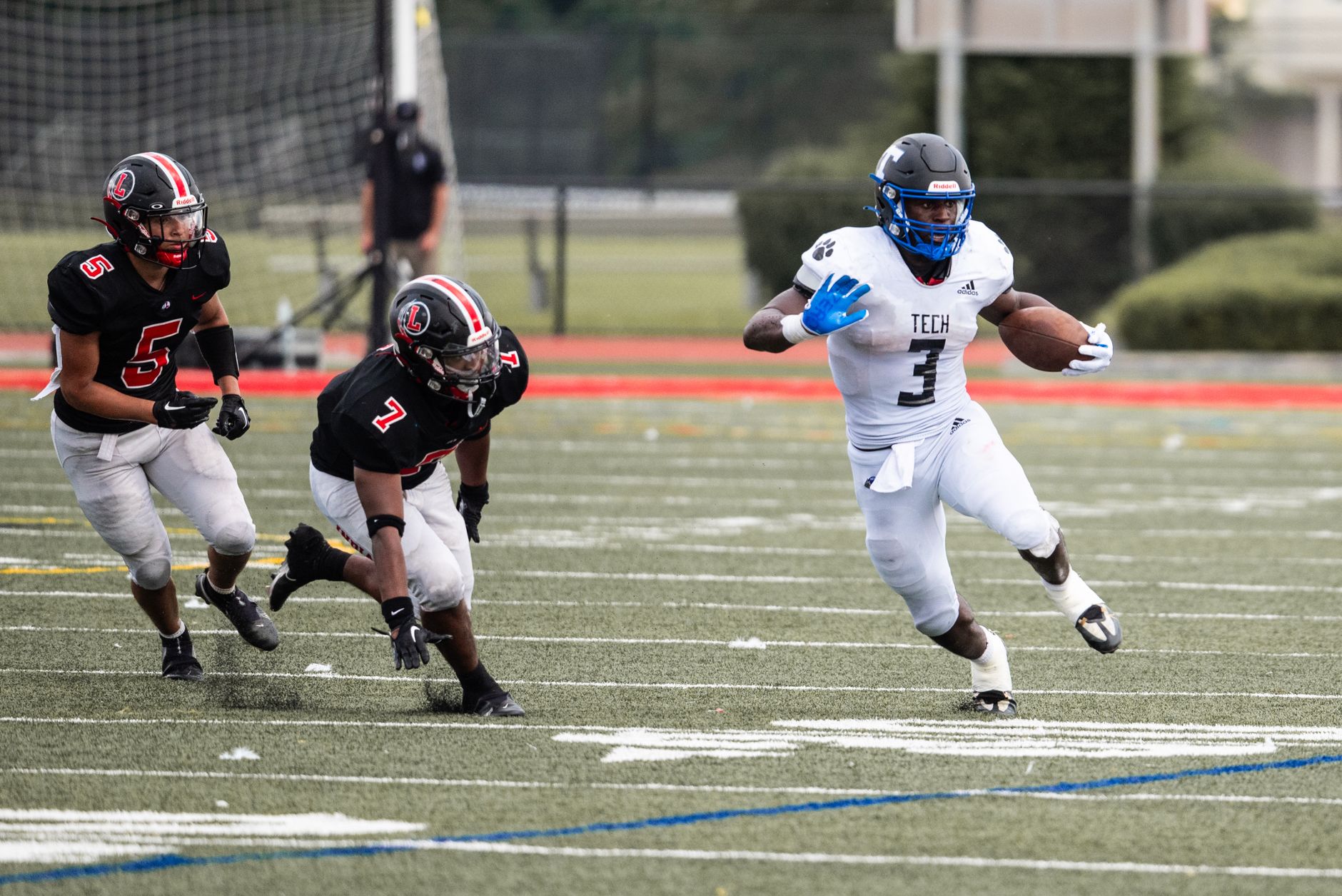
Photo by Hawk i i on Pexels
Want a sharper method for separating signal from noise?
Should You Try College Football Analysis Today?
You should try college football analysis today if you are willing to compare schedules, efficiency, personnel, and context instead of following rankings blindly. The best starting point is one game, one matchup, and five measurable variables: success rate, explosiveness, pressure, turnovers, and field position. This approach costs nothing beyond time and produces more defensible conclusions than casual team loyalty.
Start with a repeatable workflow:
- Record each team’s last five opponents and their average ranking.
- Compare offensive and defensive success rates.
- Check quarterback status, offensive-line continuity, and transfer usage.
- Review home-field, travel, weather, and rest conditions.
- Compare your probability with the market line, then identify disagreement.
- Set a confidence limit and avoid treating uncertainty as failure.
A practical edge case is worth remembering. If two teams average 6.2 and 5.8 yards per play, the difference is only 0.4 yards, but over 65 snaps it represents approximately 26 yards before penalties and turnovers. That gap may matter, yet it does not guarantee victory because field position, finishing drives, and fourth-quarter decisions can overwhelm it. Similarly, a team with a 70% red-zone touchdown rate may regress if that figure was built on only 10 possessions. Numbers need denominators, not applause.
[Internal Link: college football betting odds explained]
The strongest conclusion is also the least fashionable: college football rewards patient uncertainty. The 2026 schedule, CFP structure, FBS–FCS matchups, and evolving transfer landscape make every prediction provisional. Follow NCAA data, ESPN scheduling information, conference reports, and verified injury updates, then document why your view changes. Match Daily can provide a broader sports-analysis lens, but the decision should remain evidence-based, responsible, and within your limits.
Review the latest match context and keep your process disciplined.
Frequently Asked Questions
Q: What is college football?
A: College football is American football played by university teams under NCAA competition structures, primarily across the FBS and FCS levels. The FBS contains the most prominent programs and leads to bowl games and the College Football Playoff, while the FCS uses a separate championship format. Major conferences include the SEC, Big Ten, Big 12, ACC, and American Athletic Conference.
Q: How many games are in a college football regular season?
A: Most FBS teams play 12 regular-season games before conference championships, bowls, or CFP games. The schedule normally combines conference opponents, nonconference games, rivalry fixtures, and occasional neutral-site contests such as the 2026 North Carolina–TCU game at Aviva Stadium in Dublin. Postseason participation can add between 1 and 4 games, depending on the team’s results and CFP progress.
Q: What is the difference between FBS and FCS football?
A: FBS and FCS are two NCAA football subdivisions with different postseason systems, roster structures, and competitive resources. FBS teams generally have greater scholarship capacity and broader national exposure, while FCS programs can still be highly competitive through experienced players and specialized systems. North Dakota State is a notable example of an FCS program capable of testing stronger-resourced opponents.
Q: How should I analyze college football odds?
A: Analyze college football odds by comparing the market spread and total with schedule strength, injuries, efficiency, travel, weather, and matchup style. For example, a listed spread such as TCU -6.5 against North Carolina is a probability signal, not a guaranteed margin. Compare at least two reputable providers, set a fixed budget, and never risk money needed for essential expenses.
Q: Why do college football rankings change so quickly?
A: College football rankings change quickly because each result updates a team’s record, opponent résumé, perceived strength, and postseason position. Early-season rankings are especially unstable because teams may have played only 2 or 3 games, making turnover margin and opponent quality statistically noisy. Quarterback injuries, transfer performances, and major conference wins can also shift polls and computer models within one week.
Q: What should I check before watching a college football game?
A: Check the starting quarterbacks, recent opponent quality, offensive and defensive success rates, home or neutral venue, weather, and rest days before kickoff. ESPN, NCAA reports, conference websites, and verified team announcements are useful sources for schedule and roster updates. Spend 10 minutes comparing those factors rather than relying only on a preseason ranking or television narrative.
Q: Is college football analysis useful for Match Daily readers?
A: College football analysis is useful for Match Daily readers because its methods overlap with World Cup evaluation: tactical shape, player availability, form, matchup advantages, and probability. The sports differ in rules and season structure, but both punish analysis based solely on reputation. Use Match Daily for broader football insights while applying responsible, data-led judgment to every college football market.
College football rewards anyone prepared to challenge the obvious answer with better evidence, stronger context, and a willingness to revise. Start with the 2026 schedule, compare FBS and FCS realities, and let the numbers argue before the crowd does. Believe it or not—I do.