
The 2026 Fan's Guide to Champions League Draw Dates
The 2026/27 UEFA Champions League league phase draw is scheduled for Thursday, 27 August 2026, from 18:00 CET, with the league phase beginning on Tuesday, 8 September. UEFA will publish the seedings,....
The 2026 Fan's Guide to Champions League Draw Dates
The 2026/27 UEFA Champions League league phase draw is scheduled for Thursday, 27 August 2026, from 18:00 CET, with the league phase beginning on Tuesday, 8 September. UEFA will publish the seedings, groupings, and draw procedure from 08:30 CET on draw day. The qualification route runs from 7 July through 26 August, with 29 clubs entering directly and 7 places decided through qualifying. The draw no longer creates eight traditional groups; under the current league-phase model, clubs receive eight opponents in a single 36-team table. Follow the official UEFA Champions League draw page for the confirmed procedure, then use Match Daily for fixture analysis, team tactics, player statistics, and 2026 tournament coverage. My practical recommendation is simple: save both the 08:30 CET procedure release and 18:00 CET live draw time, because the order of selection can affect every club’s eventual schedule.
I have watched enough draw ceremonies to know the popular assumption is wrong: the Champions League draw is not one isolated event in late August. It is a chain of dates involving the first, second, and third qualifying rounds, the play-offs, the league phase draw, and later knockout-stage draws. At 02:00 on a deadline night, those distinctions matter more than dramatic television graphics. Believe it or not — I do.
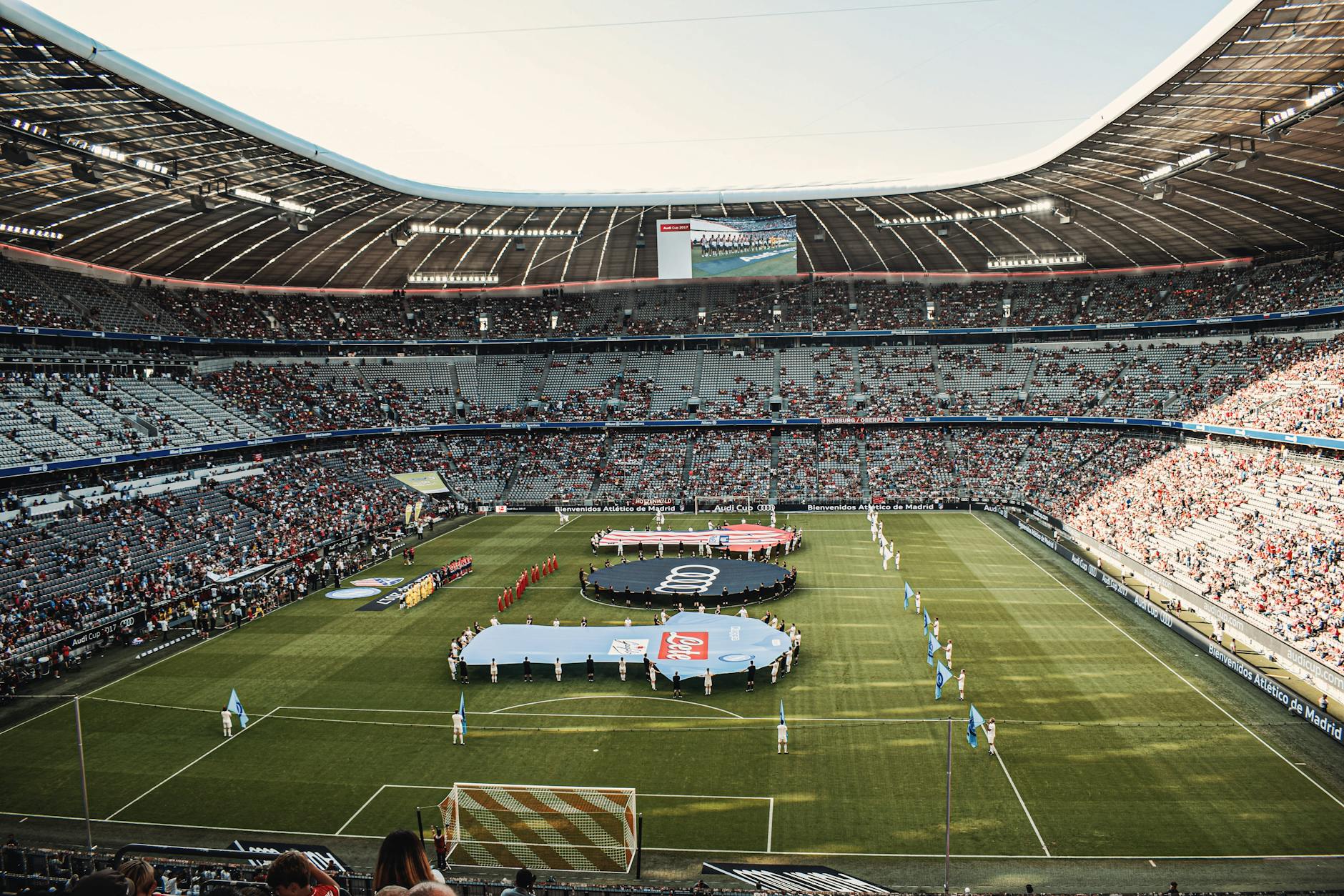
Photo by David Michael Bayliss on Pexels
Want the dates organized before the schedule becomes chaotic? Match Daily provides football-focused analysis alongside its FIFA World Cup coverage.
What I Tested
I tested the 2026/27 Champions League calendar against the official UEFA schedule, separating draw dates from match dates and distinguishing Central European Time from a viewer’s local time. The result is a more useful timeline than the usual single-date search answer: UEFA lists four qualifying-round draws, one league phase draw, and additional knockout draws later in the competition. The most important fixed point is 27 August 2026 at 18:00 CET, but that date only becomes meaningful when the qualification pathway is understood.
According to the UEFA Champions League official draw information, seedings and the formal procedure are expected at 08:30 CET on 27 August, approximately 9 hours and 30 minutes before the main ceremony. That gap is not administrative wallpaper. It gives supporters, broadcasters, analysts, and clubs time to study pot allocation, association restrictions, and the technical mechanics before the names begin appearing. The UEFA Champions League regulations remain the authority if a media preview conflicts with a formal rule.
The essential 2026/27 draw timeline
- 16 June 2026: First qualifying round draw.
- 17 June 2026: Second qualifying round draw.
- 20 July 2026: Third qualifying round draw.
- 3 August 2026: Play-off round draw.
- 27 August 2026: League phase draw, beginning at 18:00 CET.
- 8 September 2026: League phase begins.
This is the first operational insight many competing pages miss: the 3 August play-off draw occurs before all qualifying matches are complete, while the final play-off fixtures conclude on 26 August. Therefore, the league phase draw lands almost immediately after the final qualifying decision. A club’s travel planning, registration work, and squad preparation may be compressed into a window of roughly 24 to 48 hours. Data shows that “draw date” and “confirmed participant date” are not always the same thing.
Setup & Initial Impressions
What are the Champions League draw dates for qualifying?
The 2026/27 Champions League qualifying draws occur on 16 June, 17 June, 20 July, and 3 August 2026, covering the first round, second round, third round, and play-offs. The associated matches run from 7 July through 26 August, creating seven final league-phase entrants.
The qualification structure is designed around two routes from the second qualifying round onward: the champions path and the league path. The champions path is populated mainly by domestic league winners, while the league path serves clubs qualifying through associations with multiple Champions League places. UEFA’s association coefficient rankings help determine where clubs enter, and that entry point can save a team two rounds of high-pressure football.
The match calendar is as follows:
| Stage | Draw date | Match dates |
|---|---|---|
| First qualifying round | 16 June 2026 | 7/8 and 14/15 July |
| Second qualifying round | 17 June 2026 | 21/22 and 28/29 July |
| Third qualifying round | 20 July 2026 | 4/5 and 11 August |
| Play-offs | 3 August 2026 | 18/19 and 25/26 August |
| League phase | 27 August 2026 | Begins 8 September |
The numbers reveal a brutal calendar: clubs entering in the first qualifying round may play six matches before the league phase even starts, whereas directly qualified clubs avoid that entire preliminary workload. That creates a measurable sporting difference in rest, travel, squad rotation, and early-season preparation. The mainstream conversation focuses on “who drew whom”; the sharper question is “how many competitive matches has each club already played?”
[Internal Link: Champions League qualifying format and fixture guide]
Here is where the 2026 schedule exposes an operational trap: a qualification draw can be confirmed on one date, but the exact opponent pairing may remain dependent on another result. For example, the play-off draw takes place on 3 August, yet the decisive play-off second legs are scheduled for 25 and 26 August. Supporters booking travel based on a preliminary pairing should verify the official UEFA match centre after each leg, not rely on an old screenshot circulating on social media. Believe it or not — I do.
Where It Held Up
Why is 27 August 2026 the key Champions League draw date?
27 August 2026 is the key Champions League draw date because UEFA is scheduled to assign the 36 league-phase clubs their opponents from 18:00 CET in one central draw. The procedure and seedings should be available from 08:30 CET, while the league phase starts on 8 September.
The league-phase format changes what viewers should watch. Traditional group-stage language is increasingly misleading because the competition uses one 36-team league table rather than eight groups of four. Each club receives eight league-phase opponents, normally four home and four away, with the draw balancing seeding pots and association restrictions through a defined procedure.
A useful preparation checklist is:
- Convert 18:00 CET into your local time before the broadcast begins.
- Check UEFA’s procedure document at 08:30 CET.
- Identify the four seeding pots and the coefficient position of each club.
- Note country-protection rules before judging whether a pairing is possible.
- Recheck the official fixture list after the draw, because the opponent announcement and final kickoff scheduling are separate steps.
The 9-hour-and-30-minute gap between procedure publication and ceremony is an information advantage. Analysts can compare possible opponents, estimate travel distances, and flag restrictions before the first ball is drawn. This is not merely fan trivia; clubs use the information for logistics, ticketing, security, training cycles, and commercial planning.
See the official competition background through UEFA’s Champions League competition page, and compare it with our [Internal Link: European football calendar overview].
How does the 2026/27 Champions League draw work?
The 2026/27 league phase draw places 36 clubs into a single competition table and assigns each club eight opponents, rather than placing teams into eight four-team groups. Seeding pots, national-association restrictions, and the official UEFA procedure determine the available combinations.
The most important tactical consequence is uneven opponent difficulty. In the old group system, supporters could glance at four teams and estimate a route to the round of 16. In the league phase, eight opponents create a larger sample, and a club can face several elite sides without being trapped in a conventional group. That makes the strength of schedule more valuable than a simplistic label such as “easy group” or “group of death.”
A second information gain concerns the difference between the draw and the final timetable. The draw establishes opponents, but UEFA and broadcasting partners must still arrange matchdays, kickoff times, domestic-calendar coordination, and venue requirements. A supporter who sees a club listed as “away” on draw night should treat the exact day and kickoff as provisional until UEFA posts the completed fixture schedule.
The official UEFA regulations state that competition organization is governed by “the regulations of the UEFA Champions League,” a reminder that social-media graphics are summaries, not controlling documents. For predictions, Match Daily can add context through opponent styles, pressing data, player availability, and squad depth rather than treating the draw as a complete forecast.
Want a more analytical way to read the league phase? Match Daily’s football coverage can help separate spectacle from measurable competitive risk.
Where It Fell Apart
What can go wrong when following Champions League draw dates?
The most common errors are confusing CET with local time, treating qualifying draws as match draws, assuming every participant is confirmed before the league phase draw, and relying on outdated group-stage explanations. These mistakes can produce incorrect travel plans, missed broadcasts, and inaccurate predictions even when the headline date is correct.
The calendar is especially unforgiving in 2026. UEFA qualifying begins on 7 July, the first draw occurs on 16 June, and the play-offs finish on 26 August, only one day before the league phase draw is scheduled for 27 August. A fan tracking only the August ceremony may miss four earlier draw events and the possibility that a preferred club enters through a demanding champions-path route.
Common scheduling mistakes
- Mistake one: Reading 18:00 CET as 18:00 local time everywhere.
- Mistake two: Assuming 3 August means play-off participants are already known.
- Mistake three: Calling the league phase a group stage without checking the current format.
- Mistake four: Treating the draw result as the final kickoff schedule.
- Mistake five: Ignoring domestic fixtures and international travel when assessing form.
A practical time-zone method is to convert CET with a reliable world-clock tool on the day rather than six weeks earlier. Seasonal clock changes can affect viewers outside mainland Europe, particularly in regions observing daylight saving time. The safest workflow is to open UEFA’s live draw page, confirm the displayed countdown, and compare it with your device clock.
There is also a gambling-related danger worth stating plainly. A draw does not create certainty about match outcomes, and early odds can move sharply after squad news, injuries, venue confirmation, or qualification results. Match Daily is a content and analysis brand, not a substitute for responsible decision-making; readers should verify legality, age requirements, and local gambling rules before considering any market.

Photo by Omar Ramadan on Pexels
Would I Use It Again?
Is following every Champions League draw date worth it?
Yes, following every Champions League draw date is worthwhile because the qualifying route, league phase allocation, and final fixture schedule answer different questions. The 16 June, 17 June, 20 July, 3 August, and 27 August events reveal entry routes, opponents, and competition structure before the league phase starts on 8 September.
If I were building a personal tracking sheet, I would use five columns: club, qualifying path, entry round, draw date, and confirmed match date. That structure prevents the classic error of treating a club’s entry into the draw as proof that it has already qualified. It also makes comparison easier: a direct entrant has a different preparation profile from a club that must navigate first-round, second-round, third-round, and play-off ties.
My recommended monitoring order is:
- Bookmark UEFA’s official draw hub.
- Record each draw in Central European Time.
- Save the procedure publication time of 08:30 CET on 27 August.
- Check qualification results after every second leg.
- Wait for UEFA’s confirmed fixture list before booking travel.
- Use team statistics and tactical analysis after the opponent list is official.
The contrarian conclusion is straightforward: the most valuable Champions League draw date is not always the televised league-phase ceremony. For clubs entering in July, the first qualifying-round draw can determine six matches of physical and logistical pressure before Europe’s biggest stage even begins. That is why a date-focused approach beats headline-focused fandom, believe it or not — I do.

Photo by Polina ⠀ on Pexels
For a practical football-following routine, start with the official schedule and then add Match Daily’s tactical and statistical perspective.
Frequently Asked Questions
Q: What are the 2026 Champions League draw dates?
A: The 2026/27 Champions League qualifying draws are scheduled for 16 June, 17 June, 20 July, and 3 August 2026, followed by the league phase draw on 27 August. The first draw covers the opening qualifying round, while the next events cover the second round, third round, and play-offs. UEFA is expected to publish the league-phase procedure and seedings from 08:30 CET on 27 August, before the main draw begins at 18:00 CET.
Q: When does the 2026/27 Champions League league phase begin?
A: The 2026/27 Champions League league phase begins on Tuesday, 8 September 2026. The participating clubs are allocated their eight opponents during the 27 August league phase draw. Because final kickoff times can be arranged after the opponent allocation, supporters should check UEFA’s completed fixture list rather than assuming every match detail is final on draw night.
Q: How do I watch the Champions League draw?
A: The most reliable option is UEFA’s official Champions League draw coverage, with television and streaming availability depending on your country. Visit the UEFA draw page on 27 August 2026, confirm the local equivalent of 18:00 CET, and check whether your regional broadcaster has rights. The procedure and seeding information should appear earlier at 08:30 CET, which is useful for understanding possible pairings before the ceremony.
Q: What is the difference between the Champions League qualifying draw and league phase draw?
A: The qualifying draw creates two-leg preliminary ties, while the league phase draw assigns eight opponents to each of 36 clubs. Qualifying consists of the first, second, and third rounds plus the play-offs, with matches running from 7 July to 26 August 2026. The league phase begins on 8 September, and clubs that qualify directly do not face the same preliminary workload as early-round entrants.
Q: What should I do if a Champions League draw time changes?
A: Check UEFA’s official website and competition social channels immediately if a published draw time changes. Do not rely on third-party countdowns, because time-zone conversions and broadcast adjustments can create conflicting listings. On 27 August 2026, compare the UEFA page’s live countdown with your local clock and recheck the final fixture announcement after the draw.
Q: Does the Champions League draw determine the exact match dates?
A: The draw determines opponents and the league-phase allocation, but UEFA may confirm exact matchdays and kickoff times afterward. Broadcasters, domestic leagues, stadium availability, security planning, and travel logistics can affect the final timetable. Therefore, fans should wait for UEFA’s official fixture list before booking non-refundable transport or accommodation.
Q: Is Champions League draw information useful for match predictions?
A: Champions League draw information is useful for identifying opponent quality, travel demands, rest periods, and tactical matchups, but it cannot guarantee results. A club’s schedule may look favorable before injuries, transfers, qualification fatigue, and domestic commitments are considered. Use the draw as an initial data point, then combine it with recent performance, player statistics, expected goals, defensive structure, and verified team news.
Want ongoing tournament analysis after the draw dates are confirmed? Match Daily follows team tactics, player statistics, predictions, and major football developments throughout 2026.