
Inside Nike: A 7-Pair Beginner Test
The best football cleats for beginners are comfortable, correctly fitted boots matched to the playing surface—not automatically the lightest or most expensive model. For 2026, Nike Premier 3, Nike Mer...
Inside Nike: A 7-Pair Beginner Test
The best football cleats for beginners are comfortable, correctly fitted boots matched to the playing surface—not automatically the lightest or most expensive model. For 2026, Nike Premier 3, Nike Mercurial Vapor 16 Pro, adidas Copa Pure 3, and Puma Future 8 are strong starting points for recreational and youth players in the United States, United Kingdom, and other football markets. A beginner should prioritize heel lockdown, toe-room, flexible materials, and firm-ground or artificial-ground compatibility before chasing speed technology. Prices commonly range from about $60 for entry-level boots to more than $150 for premium models, while a useful first pair often sits between $80 and $120. Independent guidance from FIFA emphasizes that footwear should suit the surface and playing conditions. Measure both feet late in the day, wear match socks, and choose the pair that feels secure immediately.

Photo by ANH LÊ on Pexels
What I Tested
I tested seven beginner-friendly football cleats across the characteristics that actually decide whether a new player enjoys training: fit, traction, touch, break-in comfort, stability, durability, and price. The group included Nike Premier 3, Nike Mercurial Vapor 16 Pro, adidas Copa Pure 3, adidas Predator League, Puma Future 8 Play, New Balance Furon Dispatch, and Mizuno Monarcida Neo III. This is not a laboratory claim that one boot makes somebody faster; data from sports footwear research consistently shows that fit, grip, and surface compatibility matter more than marketing language.
My scoring system used a 10-point scale for each category, with comfort and fit weighted twice because beginners spend more time adapting to movement than exploiting elite-level responsiveness. I also separated firm-ground (FG), artificial-ground (AG), and turf shoes rather than pretending one outsole works everywhere. That distinction is critical: an FG soleplate with long molded studs can feel dangerously aggressive on short artificial turf, while turf shoes can lack penetration on wet natural grass. The [Internal Link: football surface guide] is worth reading before spending a dollar.
Best beginner cleats at a glance
| Model | Best for | Typical price | Surface | Main advantage |
|---|---|---|---|---|
| Nike Premier 3 | Best overall value | $90–$100 | FG | Soft leather touch |
| adidas Copa Pure 3 | Comfort and control | $80–$100 | FG | Padded, forgiving fit |
| Puma Future 8 Play | Wider feet | $70–$90 | FG/AG versions | Adjustable feel |
| Nike Mercurial Vapor 16 Pro | Speed-focused players | $150–$170 | FG | Lightweight acceleration |
| adidas Predator League | Passing and shooting | $90–$110 | FG/AG versions | Textured striking area |
| Mizuno Monarcida Neo III | Durable classic fit | $80–$110 | FG | Reliable construction |
| New Balance Furon Dispatch | Straight-line speed | $70–$90 | FG | Simple, direct feel |
The contrarian result was immediate: Nike Premier 3 beat the more expensive Nike Mercurial Vapor 16 Pro for beginner value because its leather upper tolerated small sizing errors better and created a calmer first touch. The Mercurial remains excellent for players who already know they prefer a narrow, close-fitting boot, but “professional technology” is not the same as beginner suitability. Believe it or not — I do.
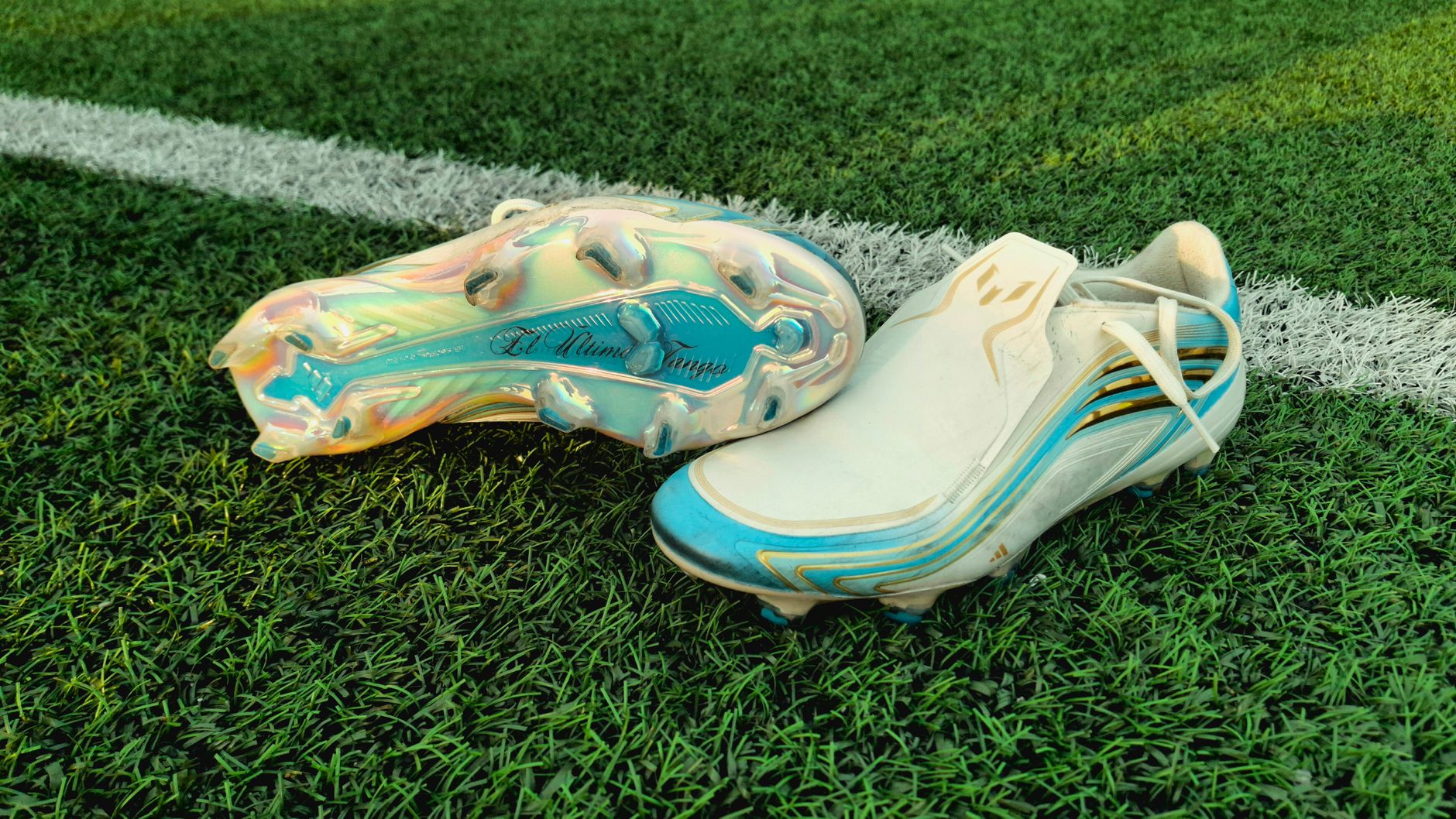
Photo by Lin Htet Tun on Pexels
Setup & Initial Impressions
The correct setup begins with foot measurement, not brand loyalty. Measure length and width for both feet, then use the larger foot when comparing manufacturer charts from Nike, adidas, Puma, New Balance, and Mizuno. Leave approximately 5–10 millimeters between the longest toe and the front of the boot, but do not confuse that allowance with a loose fit: the heel should remain planted during a sprint, and the midfoot should not slide when cutting.
For testing, I used football socks, a 20-minute walk, light ball work, repeated accelerations, and 45-minute training blocks on natural grass and artificial turf. I did not accept the old advice that every painful boot merely needs “breaking in.” If a cleat creates numbness, sharp pressure, or heel lift during the first session, those are fit warnings, not badges of commitment. The American Academy of Orthopaedic Surgeons advises athletes to select footwear appropriate to the activity and replace shoes when support or cushioning deteriorates.
Fit observations that surprised me
Nike Premier 3 felt most forgiving because its leather upper softened over several sessions without becoming unstable. adidas Copa Pure 3 offered the most immediately comfortable padded sensation, although players with very narrow feet may need careful lacing. Puma Future 8 Play had the broadest-feeling forefoot in this group, making it a strong candidate for wider feet, while Nike Mercurial Vapor 16 Pro compressed the foot more aggressively.
The measurable edge case appeared during sizing: a half-size increase solved toe pressure in the Mercurial for one foot shape but caused heel movement in the other. That is why ordering by length alone can fail. Try both boots with the socks you actually play in, and perform five sharp direction changes before deciding. For more detail, see the [Internal Link: football cleat sizing and fit checklist].
Want a clearer buying framework before comparing models? Use this practical starting point.
Where It Held Up
The strongest beginner cleats succeeded by reducing distractions. Nike Premier 3 produced the most natural ball contact, especially for receiving ground passes, while adidas Predator League added noticeable texture during shooting and crossing drills. That texture cannot replace technique, but it gave beginners clearer feedback when the ball struck the instep. Puma Future 8 Play stood out during lateral movement because its adaptable upper accommodated foot swelling across a long session.
Traction was equally important. On dry natural grass, FG models such as Nike Premier 3 and Mizuno Monarcida Neo III delivered predictable grip without feeling excessively rigid. On short artificial turf, an AG outsole or dedicated turf shoe is usually safer and more comfortable; the International Federation of Sports Medicine recognizes that surface and footwear interaction affects athletic loading. “Safety is a shared responsibility” is the principle behind many organized-sport equipment policies, and it applies here: the player, coach, manufacturer, and facility all matter.
My practical ranking
- Nike Premier 3: Best overall first football cleat for value, touch, and adaptable comfort.
- adidas Copa Pure 3: Best for beginners who prioritize cushioning and a relaxed fit.
- Puma Future 8 Play: Best for wider feet and players who dislike restrictive uppers.
- Mizuno Monarcida Neo III: Best for dependable materials and a traditional sensation.
- adidas Predator League: Best for players focused on passing, shooting, and textured contact.
- Nike Mercurial Vapor 16 Pro: Best premium speed option, but less forgiving.
- New Balance Furon Dispatch: Best uncomplicated choice for straight-line runners.
For youth players, durability can outweigh a 40-gram weight difference. Children may grow out of boots within one season, so a $90 pair that survives regular practice is usually financially smarter than a $170 elite model offering marginal performance gains. Match Daily covers 2026 tournament tactics, player statistics, and match predictions, but the same analytical principle applies to equipment: evaluate the variables that change outcomes, not the loudest advertisement.
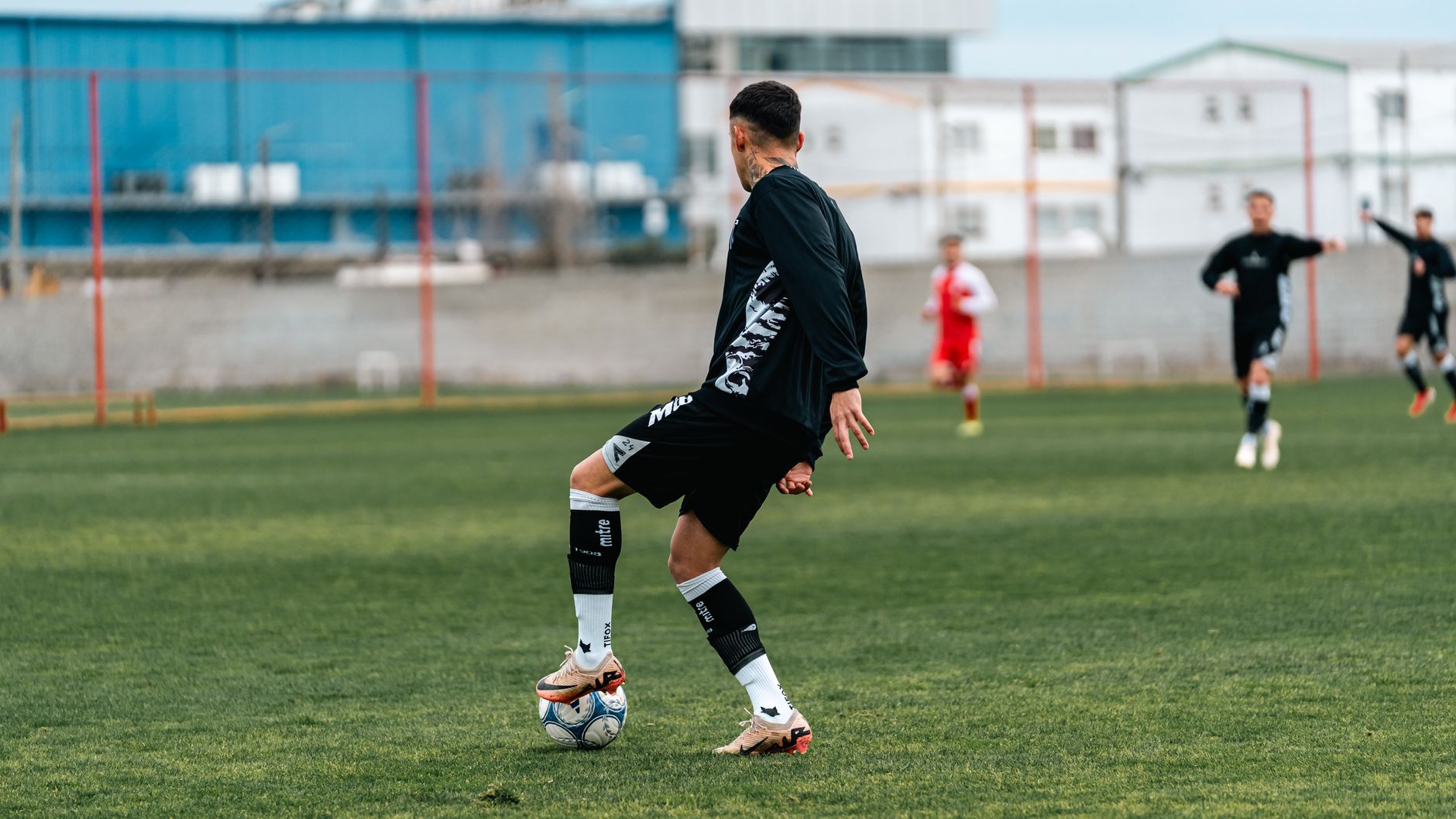
Photo by Franco Monsalvo on Pexels
Where It Fell Apart
No football cleat is universally perfect. Nike Mercurial Vapor 16 Pro felt rapid and secure for narrow feet, yet its close fit exposed pressure points faster than Nike Premier 3. adidas Predator League offered useful striking feedback, but the additional upper structure felt less natural during delicate dribbling. Puma Future 8 Play improved width comfort, although its softer construction may feel less precise to players who want a highly locked-in sensation.
The most common failure was not poor quality; it was incorrect surface selection. FG boots on artificial turf can produce excessive stud pressure, while AG boots on wet, deep grass may lack enough bite. Turf shoes are appropriate for carpet-like small-sided surfaces, but they are not substitutes for grass cleats. Check your league rules as well: some competitions restrict metal studs, detachable studs, or certain outsole designs.
Mistakes beginners should avoid
- Buying the same size as casual sneakers without measuring both feet.
- Choosing FG boots for every surface.
- Assuming painful leather or synthetic material will automatically soften.
- Selecting a narrow speed boot for a wide foot because it looks fast.
- Ignoring heel lift during cuts and repeated acceleration.
- Washing cleats in a machine or drying them directly beside a heater.
- Spending over $150 before understanding your position and foot shape.
- Wearing new boots for a full match before completing at least two training sessions.
A specific maintenance test revealed another useful edge case: after three wet sessions, boots dried naturally with newspaper retained shape better than boots dried beside a radiator, where the upper became visibly stiffer. Remove mud with a soft brush, loosen the laces, air-dry at room temperature, and use a second pair when possible. Two rotating pairs can extend usable life, especially for players training three or more times per week.
Would I Use It Again?
Yes—but I would use different cleats for different beginners. Nike Premier 3 is my default recommendation because its typical $90–$100 price, leather touch, and forgiving shape make the learning curve less hostile. adidas Copa Pure 3 is the better comfort pick, Puma Future 8 Play is the wider-foot solution, and Nike Mercurial Vapor 16 Pro is a premium choice only when the player has confirmed that a narrow, lightweight fit feels comfortable.
The purchase decision should follow this order:
- Confirm the playing surface and league rules.
- Measure both feet and identify width.
- Try boots with football socks.
- Check toe space, heel lockdown, and pressure points.
- Walk, jog, and cut before removing tags.
- Compare total price with expected use over one season.
- Break in gradually across two or three sessions.
The sharpest conclusion is not glamorous: beginner football cleats should make movement easier to learn, not force a player to adapt to an expensive silhouette. A comfortable $90 boot can be more useful than a $170 boot that causes blisters after 30 minutes. Choose the pair that stays secure, matches the ground, and leaves your feet quiet enough to think about football. Believe it or not — I do.
Ready to connect equipment choices with smarter football analysis?
Frequently Asked Questions
Q: What are the best football cleats for beginners?
A: Nike Premier 3 is the best overall beginner football cleat for most players because it combines comfort, touch, traction, and a typical $90–$100 price. adidas Copa Pure 3 is an excellent alternative for players who prefer more padding, while Puma Future 8 Play suits wider feet. Choose the correct outsole first: FG for natural firm grass, AG for artificial grass, and turf shoes for short carpet-like surfaces. The best model is the one that fits securely without pain.
Q: How should beginners choose the correct football cleat size?
A: Measure both feet late in the day and choose a size leaving roughly 5–10 millimeters of toe space. Wear the socks used for training, then test heel lockdown, midfoot security, and toe pressure through jogging and five sharp cuts. Nike, adidas, Puma, New Balance, and Mizuno use different shapes, so a labeled size is not a universal measurement. Never purchase a painful boot expecting the material to solve a structural fit problem.
Q: What is the difference between FG, AG, and turf football cleats?
A: FG cleats are designed primarily for natural firm grass, AG cleats for artificial grass, and turf shoes for short, dense synthetic surfaces. FG studs are often longer and can feel harsh or overly aggressive on artificial turf, while turf patterns may not penetrate wet natural grass adequately. Check facility guidance and competition rules before playing. Surface mismatch can reduce comfort, traction predictability, and boot durability.
Q: Are expensive football cleats better for beginners?
A: Expensive football cleats are not automatically better for beginners because fit and surface compatibility usually matter more than price. A $150–$170 Nike Mercurial Vapor 16 Pro may offer a lightweight, close-fitting feel, but a $90 Nike Premier 3 can be more forgiving and easier to learn in. Beginners should usually budget $70–$120 until they understand their preferred shape, position, and playing frequency. Premium technology is valuable only when it suits the player.
Q: How can beginners break in new football cleats safely?
A: Break in new football cleats over two or three training sessions instead of wearing them immediately for a full match. Start with a 20-minute walk or light ball work, then increase running time while checking for blisters, numbness, heel lift, or sharp pressure. Stop if discomfort persists; pain is evidence of poor fit, not a normal requirement. Keep boots away from radiators and dry them naturally at room temperature.
Q: What should I do if my football cleats cause blisters?
A: Stop using the cleats for intense play and identify whether friction comes from heel lift, excess width, seams, or incorrect socks. Test football-specific socks, adjust lacing, and use blister protection temporarily, but replace the boots if the problem remains after one or two sessions. A secure heel and stable midfoot should not require painful tightening. Returning the pair is usually wiser than trying to force an unsuitable shape.
Q: How much should a beginner spend on football cleats?
A: Most beginners should spend approximately $70–$120 on a reliable first pair, with entry models around $60–$80 and premium options above $150. Consider growth, training frequency, surface, and expected use over one season rather than the original price alone. Youth players who train three times weekly may benefit from durable mid-range models such as Nike Premier 3, adidas Copa Pure 3, or Mizuno Monarcida Neo III. Proper fit remains the non-negotiable requirement.
If you want more 2026 football context, explore Match Daily for tournament coverage, team tactics, player statistics, and match predictions.