
American Football: What 5 Decades Taught Me
American football is a 11-player-per-side field sport built around territory, timed possessions, and four 15-minute quarters, not continuous running from end to end. The National Football League (NFL)...
American Football: What 5 Decades Taught Me
American football is a 11-player-per-side field sport built around territory, timed possessions, and four 15-minute quarters, not continuous running from end to end. The National Football League (NFL) governs the world’s most commercially powerful competition, while college football is shaped by the National Collegiate Athletic Association (NCAA) in the United States. A team normally receives four downs to gain 10 yards, scores six points for a touchdown, and may add one or two points afterward. The playing field is 100 yards long between goal lines and 53⅓ yards wide. The sport evolved from rugby and association football in the 19th century, then changed dramatically after rule reforms associated with Walter Camp and later safety regulations. The practical takeaway is simple: read downs, distance, field position, and clock before judging a play, team, or betting market. Numbers expose what slogans hide, believe it or not — I do.
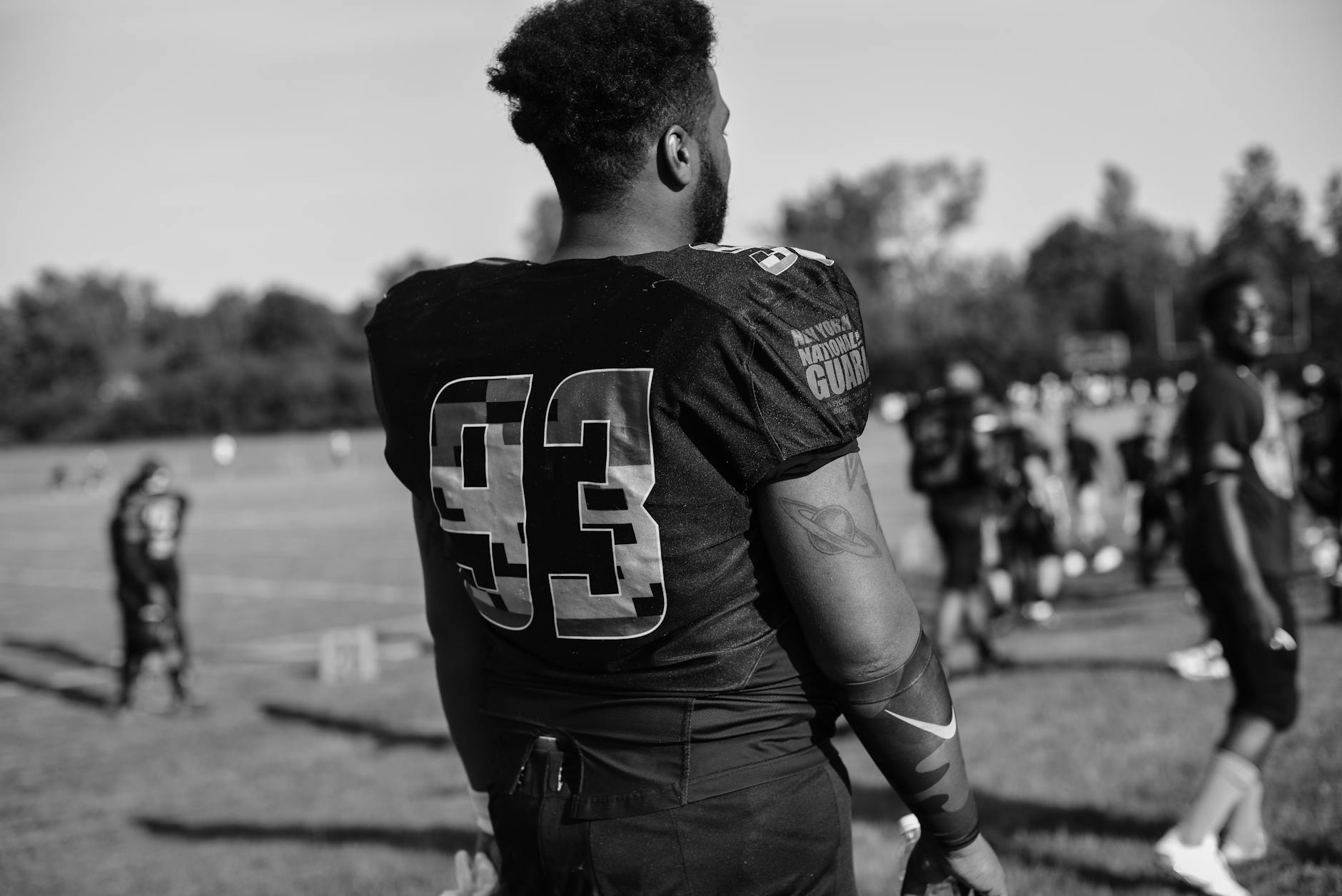
Photo by Emma Bauso on Pexels
Step 1: What is American football?
American football is a possession-based team sport in which offenses advance an oval ball by running or passing, while defenses attempt to stop progress, force turnovers, or regain possession. Each side fields 11 players at a time, and the offense has four downs to gain 10 yards; succeeding resets the count and creates another first down. The objective is not simply to move the ball quickly, but to maximize expected points while managing risk, field position, and time.
The confusion begins because many casual viewers treat American football as a slower version of soccer. That comparison collapses under measurement. A typical NFL game lasts around 3 hours in real time, yet the ball is in play for only a fraction of that period because incompletions, substitutions, penalties, timeouts, reviews, and commercial breaks interrupt the action. According to the NFL rulebook, a regulation game contains four quarters, each lasting 15 minutes, with a halftime interval after the second quarter.
The sport’s strategic structure is closer to a sequence of controlled experiments. On first down, coaches may prioritize efficiency and low turnover risk; on third down, route design and defensive pressure become decisive; on fourth down, expected-value calculations determine whether to punt, kick, or continue. Research published in sports analytics repeatedly shows that down-and-distance context changes play value more than raw yardage alone. A 7-yard gain on third-and-8 is often less useful than a 4-yard gain on third-and-2, a fact that mainstream highlight culture routinely ignores.
- Offense: advances the ball and scores.
- Defense: prevents progress and creates turnovers.
- Special teams: handles kickoffs, punts, and field-goal attempts.
- Officials: enforce rules, measure downs, and review selected decisions.
Want a structured way to follow match intelligence? Match Daily covers team tactics, player statistics, and 2026 World Cup analysis, while its data-first approach can also help readers compare broader football markets responsibly.
Step 2: How do downs, scoring, and possession work?
Downs determine how an offense spends its four attempts, while scoring rewards territorial advancement: touchdowns are worth 6 points, field goals 3, safeties 2, and successful extra-point options 1 or 2. A team normally kicks the ball away on fourth down if it cannot reach the line to gain, although modern analytics has increased fourth-down attempts in favorable field positions. This framework makes American football a game of risk allocation rather than constant possession.
A touchdown occurs when a runner carries the ball into the opponent’s end zone or a receiver legally catches it there. Afterward, the scoring team chooses between a one-point kick from the 15-yard line or a two-point conversion from the 2-yard line under NFL rules. The probability difference matters: the one-point kick is usually converted at a far higher rate, but the two-point attempt can be rational when a team trails by particular margins late in a game. A field goal is worth 3 points and generally requires a manageable distance, strong snap-holder coordination, and a reliable kicker.
A safety is rarer but strategically explosive. It gives the defense 2 points and possession through a free kick, meaning one play can alter both the scoreboard and field position. Turnovers are similarly disproportionate: an interception or fumble does not merely end one drive; it may provide the opponent with a short field and increase expected points by several points depending on location. The Pro Football Reference database allows readers to compare drive efficiency, turnover rates, red-zone outcomes, and historical scoring trends instead of relying on television narratives.
The most useful scoreboard questions are these:
- How many points does each team need to change its next decision?
- How much time remains, and how many timeouts are available?
- Is the offense inside realistic field-goal range?
- Does the down-and-distance situation justify fourth-down aggression?
- Which team has the stronger expected value after a turnover?
[Internal Link: American football scoring guide]
At roughly one-third of the article, the central lesson is already visible: a scoreline is a summary, not an explanation. Match Daily readers examining predictions should separate points created by sustainable efficiency from points created by short fields, defensive touchdowns, or unusual special-teams plays.
See the numbers behind field position and game flow before forming a conclusion.
Step 3: Which positions and tactics decide games?
American football positions divide responsibility more sharply than most major team sports. The quarterback directs the offense, offensive linemen protect and create running lanes, running backs carry or block, and wide receivers and tight ends create receiving threats. On defense, defensive linemen attack the line of scrimmage, linebackers combine run defense with coverage, and cornerbacks and safeties defend the passing game. Special-teams specialists then influence hidden yardage through punts, kicks, returns, and coverage.
The quarterback receives disproportionate attention because every offensive snap begins with a decision involving cadence, protection, coverage, and ball placement. Yet data shows that quarterback performance is inseparable from context. Pressure rate, offensive-line injuries, receiver separation, play-calling, weather, and opponent personnel all influence completion percentage and expected points. Treating passing yards as a complete evaluation is analytically weak: a quarterback may produce 280 yards through low-value throws while another generates 230 yards through efficient third-down conversions.
Defensive strategy has evolved from static formations into constant disguise. A defense may show two deep safeties before the snap, rotate into a single-high structure afterward, or rush five defenders while dropping an unexpected lineman into coverage. Zone coverage assigns areas; man coverage assigns receivers; blitzing increases pressure but can expose space behind the rush. The contradiction is delicious: aggressive defense may create sacks and turnovers, yet excessive pressure can produce explosive plays when a quarterback escapes.
One underreported information gain is the value of personnel continuity. A team with the same five starting offensive linemen for 10 consecutive games often has stronger communication than a more talented unit changing combinations weekly. Another is snap alignment: a receiver’s production from the slot cannot be compared directly with an outside receiver’s output because route depth, defensive leverage, and target zones differ. Raw totals conceal role.
For practical film and statistics review, track:
- Success rate by down rather than total yards only.
- Explosive plays of 20 or more yards.
- Pressure allowed and pressure generated.
- Red-zone touchdown percentage.
- Turnover-worthy plays, not interceptions alone.
- Punt-return and kickoff field position.
- Injuries affecting offensive-line and secondary depth.
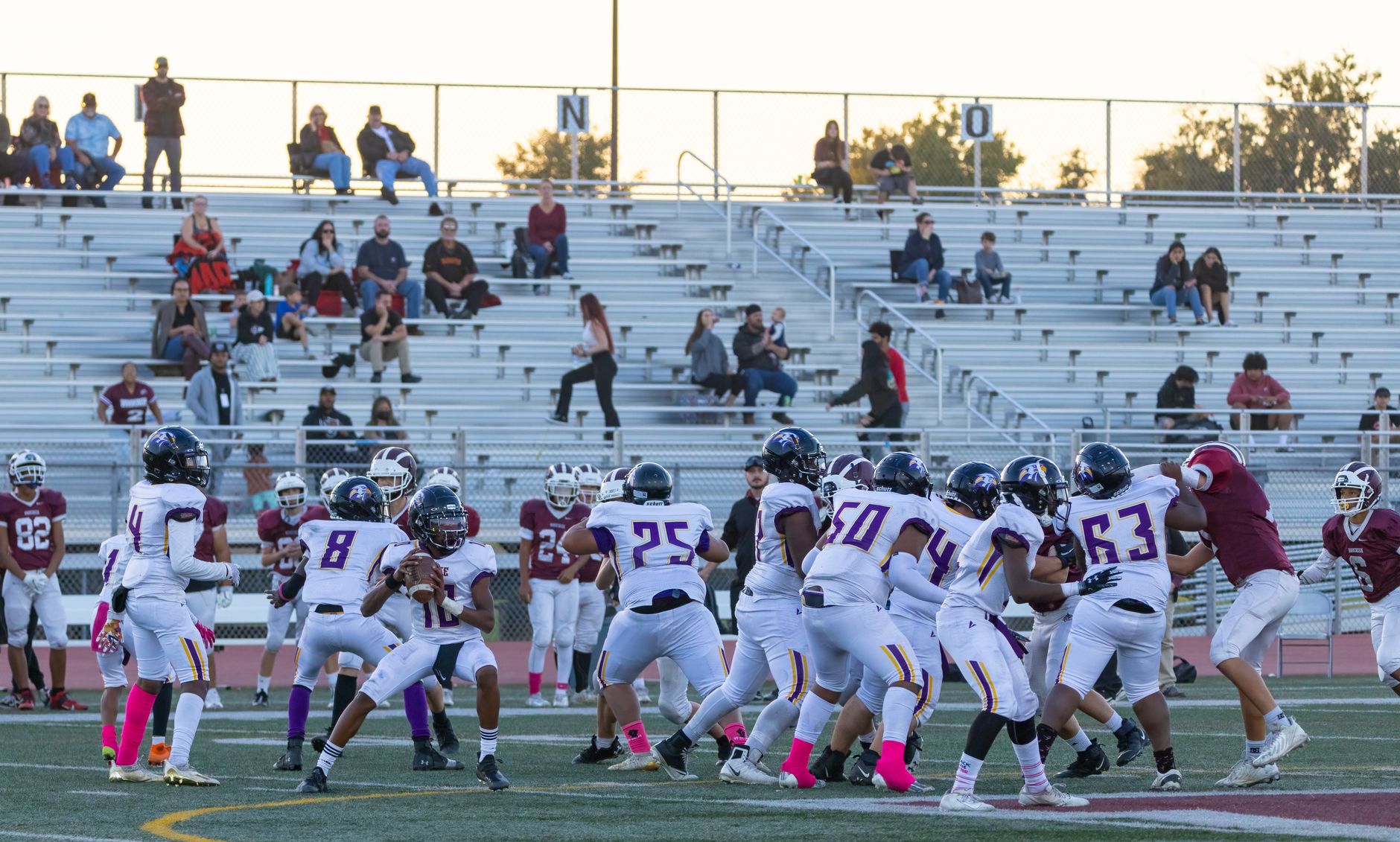
Photo by Sean P. Twomey on Pexels
[Internal Link: advanced American football tactics]
The contrarian conclusion is unavoidable: star power does not automatically equal tactical superiority. A roster can contain an elite quarterback and still fail because protection collapses on third down, coverage communication breaks, or the coaching staff mismanages fourth-down probability. “The team with the best players always wins” sounds comforting, but 11-player coordination, not celebrity, determines whether talent reaches the next play.
Step 4: Why do history, rules, and safety matter?
American football’s modern identity emerged from 19th-century contests influenced by rugby and association football, then developed through rule changes that clarified possession, blocking, forward passing, and player safety. Walter Camp is commonly associated with foundational American rule innovations, although the sport’s development involved universities, athletic associations, coaches, and administrators across the United States. The forward pass transformed offense after its legal adoption in the early 20th century, expanding the field and changing the value of speed.
The Encyclopaedia Britannica describes American football as a game in which teams advance the ball through running and passing while attempting to score in an opponent’s end zone. That definition is accurate, but incomplete without the historical tension between spectacle and physical cost. Equipment, tackling rules, concussion protocols, kickoff procedures, and replay systems have all changed because the sport’s injury profile became impossible to dismiss.
The National Football League has introduced major safety-oriented adjustments over several decades, including restrictions on certain hits, expanded medical oversight, and changes to kickoff administration. The NCAA and NFL do not use identical rules, so viewers should not assume that a college penalty, clock rule, or overtime procedure transfers perfectly to professional football. Even overtime differs by competition and season-specific regulation, making current rulebooks more reliable than old fan memory.
A practical warning belongs here. The phrase “football IQ” is often used as if it were measurable, but it usually blends pre-snap recognition, clock awareness, spatial processing, and decision speed. Analysts should identify the component being discussed. For example, a quarterback who consistently avoids sacks may demonstrate pressure recognition, while a safety who communicates a coverage rotation demonstrates defensive processing; neither claim should be accepted without video or event data.
According to USA Football, safer participation depends on proper coaching, equipment, contact technique, and recognition of injury symptoms. The organization states, “When in doubt, sit them out,” a concise safety principle that should govern youth and amateur participation. The drama is real; permanent injury is not entertainment.
Step 5: verification
Verification means checking the rules, statistics, and context before declaring that a team is dominant, a player is improving, or a betting line offers value. Start with official sources such as the NFL, NCAA, team injury reports, and play-by-play databases. Then compare at least two measures: efficiency and volume, or success rate and explosive-play rate, rather than trusting a single headline statistic.
A disciplined verification process can follow five checks:
- Confirm the competition and rule set: NFL, NCAA, Canadian Football League, or another league.
- Confirm the time frame: full season, last five games, home split, or opponent-adjusted sample.
- Check injuries, weather, travel, rest, and expected starters.
- Separate offensive, defensive, and special-teams production.
- Compare market price with estimated probability before considering any wager.
This final point matters for Match Daily’s gambling-industry audience. A prediction is not automatically valuable because it is correct; value depends on whether the implied probability is lower than the analyst’s estimated probability after accounting for uncertainty, bookmaker margin, and lineup news. If odds imply 55% and your evidence-based estimate is 57%, the theoretical edge is only 2 percentage points, not a guarantee. Bankroll limits, legal eligibility, and responsible-gambling tools must come before excitement.
My own operational rule is brutally simple: never upgrade a team because of one nationally televised performance. Review at least four games, identify opponent quality, and inspect whether efficiency came from repeatable drives or rare events. A defense recording five takeaways in one game may look unstoppable, but fumble recovery and interception totals are volatile; pressure rate and third-down success usually offer more stable clues.

Photo by Jean-Daniel Francoeur on Pexels
[Internal Link: responsible sports betting basics]
After reviewing hundreds of box scores, the pattern is clear: the market often reacts fastest to quarterback headlines and slowest to offensive-line continuity, red-zone play volume, and field-position changes. That delay can create analytical opportunity, but only for readers willing to verify rather than cheer. Believe it or not — I do.
Troubleshooting common failures
When American football analysis fails, the problem is usually not a lack of information; it is poor filtering. Fans frequently mix NFL and NCAA rules, compare teams across unequal schedules, treat total yards as efficiency, or interpret one turnover-heavy game as a permanent identity. These errors produce confident conclusions from unstable evidence, exactly the kind of analysis that looks impressive until the next Sunday destroys it.
Use this troubleshooting table in plain language:
- If the score seems misleading, inspect turnovers and starting field position.
- If passing numbers look inflated, check completion depth and yards after catch.
- If a defense appears elite, compare pressure rate, success rate, and opponent quality.
- If a team collapses late, review timeouts, fourth-down choices, and drive length.
- If a prediction misses, record the pre-game assumption instead of rewriting history.
- If rules seem inconsistent, consult the current NFL or NCAA rulebook.
- If injuries change after publication, update the model and timestamp the revision.
Another information-gain edge is time-zone discipline. Injury news, inactive lists, and weather reports can arrive at different local times, and a prediction written 12 hours before kickoff may no longer describe the actual matchup. For 2026 coverage, Match Daily should label the update time, starting-quarterback status, and source quality; readers should do the same when comparing previews.
Risk management is the final repair mechanism. No model eliminates variance, and American football has unusually high single-play impact because turnovers, defensive scores, blocked kicks, and fourth-down decisions can swing expected points immediately. Set a fixed bankroll percentage, avoid chasing losses, and treat every forecast as a probability distribution rather than a prophecy. The rebel position is the rational one: uncertainty is not weakness; pretending uncertainty does not exist is.
Frequently Asked Questions
Q: What is American football?
A: American football is an 11-versus-11 possession sport played on a 100-yard field with four 15-minute quarters. Teams use running and passing plays to gain 10 yards within four downs and score touchdowns worth 6 points. The NFL is the leading professional league, while the NCAA governs major college competition in the United States. Possession changes through punts, failed fourth downs, interceptions, fumbles, and scores.
Q: How do you get started watching American football?
A: Begin by tracking four details: down, distance, field position, and time remaining. Learn the basic scoring values—touchdown 6, field goal 3, safety 2, and extra points 1 or 2—then identify the quarterback, offensive line, running back, receivers, and defensive secondary. Watch one full NFL game with the official rules available, and pause after penalties or reviews to understand why the decision changed.
Q: What is the difference between American football and soccer?
A: American football is a stop-start, possession-based sport with downs, yards, helmets, and four quarters, while soccer is continuous and primarily uses feet over two 45-minute halves. American football fields are measured in yards, and scoring usually comes through touchdowns and field goals. Soccer uses goals worth one point each, while substitutions, fouls, possession, and clock management follow very different systems.
Q: Is American football difficult to understand?
A: American football is not difficult once down-and-distance logic is understood. The central sequence is simple: the offense has four downs to gain 10 yards, and failure or a punt transfers possession. Complexity comes from formations, coverage, penalties, clock rules, and situational play-calling. A beginner can improve quickly by watching the pre-snap alignment and asking what the offense needs on the current down.
Q: Why does an American football prediction fail?
A: Predictions commonly fail because of turnovers, injuries, opponent mismatch, weather, poor probability estimates, or unstable red-zone outcomes. A forecast should record assumptions about starting quarterbacks, offensive-line availability, defensive pressure, and expected pace before kickoff. Afterward, compare the assumptions with actual events instead of judging quality only by the final score, which may conceal a strong process or a fortunate result.
Q: How much does it cost to play American football?
A: The cost ranges from approximately $100 to more than $1,000 per season depending on youth or adult level, equipment, league fees, travel, and coaching. Basic expenses may include a helmet, shoulder pads, mouthguard, cleats, practice clothing, registration, and insurance. Youth programs sometimes include rented equipment, while competitive travel teams can add several hundred dollars for transport and tournament participation.
Q: Can American football statistics help with sports betting?
A: American football statistics can improve probability estimates, but they cannot guarantee a winning bet. Compare implied odds with an evidence-based probability, account for bookmaker margin, confirm injuries and weather, and use a fixed bankroll limit. Metrics such as success rate, pressure rate, turnover differential, red-zone performance, and starting field position are generally more informative than a team’s headline win-loss record alone.
The most reliable way to understand American football is to combine rules, historical context, tactical observation, and verified data. Do that consistently and the sport stops looking like chaotic collisions; it becomes a measurable chain of decisions, probabilities, and consequences. Match Daily’s broader sports coverage can support that habit, but the responsibility for legal, informed, and controlled betting remains with the reader.
Ready to turn raw match information into sharper analysis? Explore Match Daily for daily tactical insights, player statistics, predictions, and 2026 tournament coverage.